

Building Social-Emotional Skills in Preschool: Emotions, Friendships & Confidence
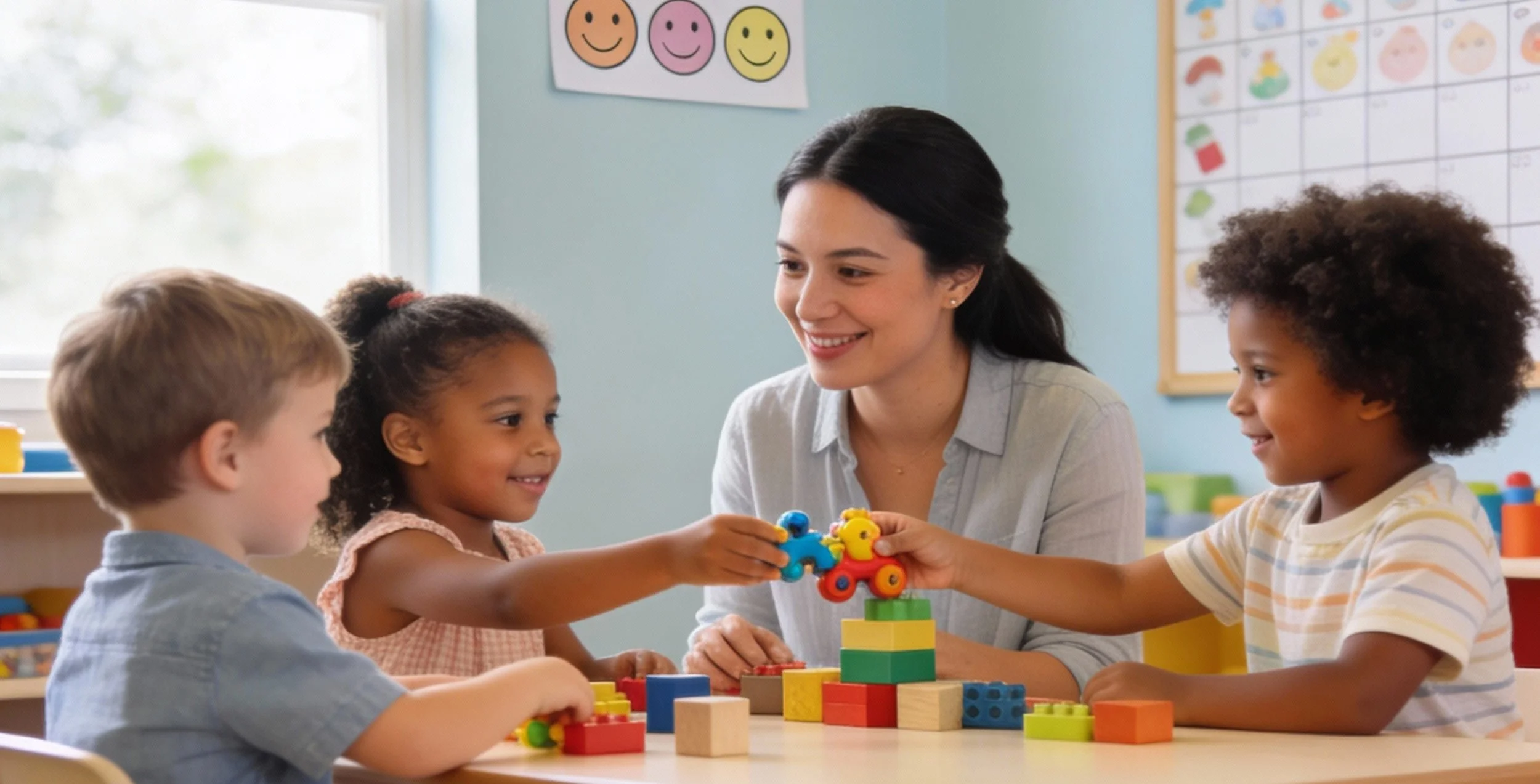
When you visit a quality preschool, you expect to see children learning their ABCs and counting to ten. But some of the most important learning happens when teachers help children understand their feelings, make friends, and believe in themselves. At Brilliant Little Minds in Pinellas Park, social-emotional skills are woven into every part of the day—not as a separate lesson, but as the foundation for how children learn, play, and grow together.
Social-emotional learning (SEL) in preschool helps young children recognize and express emotions, cooperate with peers, solve problems, and develop self-confidence. These skills matter just as much as early literacy and math because they shape how children behave in classrooms, handle frustration, and build relationships throughout their lives. Research shows that children with strong social-emotional skills in early childhood are better prepared for kindergarten and beyond, both academically and socially.
Why Social-Emotional Skills Matter in Preschool
Social-emotional skills in preschool include understanding your own feelings, recognizing how others feel, getting along with friends, cooperating in groups, and managing behavior. These are not "soft skills" that come naturally to every child—they are learned through practice, modeling, and patient guidance from caring adults.
Young children who develop strong social-emotional skills are more likely to share, take turns, ask for help when they need it, and bounce back when something goes wrong. They learn to use words instead of hitting or grabbing, and they begin to understand that other people have feelings too. All of this makes the classroom a calmer, kinder place where everyone can learn and thrive.
At our preschool program in Pinellas Park, teachers focus on building these skills daily because we know that confident, emotionally healthy children become curious, capable learners.
Helping Preschoolers Understand and Express Their Emotions
Naming Feelings in Everyday Moments
One of the first steps in emotional intelligence is learning to name what you feel. Teachers at Brilliant Little Minds help children build this skill by using simple feeling words throughout the day. When a child is excited about painting, a teacher might say, "You look really happy about those bright colors!" When a child is upset because someone took a toy, the teacher might say, "I can see you're frustrated. Let's use words to fix this."
By hearing these words over and over, children start to recognize their own emotions and connect feelings with names like happy, sad, angry, nervous, proud, or disappointed. Teachers also use picture books about feelings, songs with emotion themes, and simple visuals like feeling faces to make this learning concrete and fun.
Creating Safe Spaces for Big Feelings
Preschoolers experience big emotions—sometimes over things that seem small to adults, like the wrong color crayon or missing a turn. At Brilliant Little Minds, teachers respond calmly and with empathy instead of dismissing or punishing these feelings. If a child is upset, a teacher might offer a cozy corner with soft pillows, a favorite book, or a few minutes of quiet time to help them settle down.
The message children hear is clear: all feelings are okay, and adults will help you handle them. This approach teaches emotional regulation—the ability to calm yourself down, think about what happened, and try again. Over time, children learn that they can feel upset and still make good choices, which builds both confidence and resilience.
Supporting Relationships and Friendships in the Classroom
Teaching Kindness, Cooperation, and Turn-Taking
Preschool is often the first place where children practice being part of a group and making friends. Teachers at our Pinellas Park preschool model kind words, gentle hands, and respectful behavior every single day. They show children how to share toys, wait for a turn at the slide, and invite a friend to play.
Simple phrases make a big difference. Teachers coach children to say things like:
"Can I play with you?"
"Can I have a turn when you're done?"
"Do you want to build blocks together?"
"I'm sorry I bumped you."
These phrases might sound basic, but they are powerful tools for building friendships and preventing conflicts. Children who practice this language become better at cooperating, which helps group activities like circle time, dramatic play, and outdoor games run smoothly.
Coaching Children Through Conflict
Disagreements are normal when young children play together—someone wants the same toy, or two children have different ideas about a game. Instead of stepping in and solving the problem immediately, teachers at Brilliant Little Minds stay close and guide children through the conflict step by step.
A teacher might say, "I see you both want the red truck. Let's talk about what happened. How can we solve this together?" The children are encouraged to use words, listen to each other, and come up with a solution like taking turns or finding a similar toy.
This process takes longer than simply taking the toy away, but it teaches empathy, problem-solving, and self-control—skills that children will use for the rest of their lives. Conflict becomes a learning opportunity instead of a punishment moment.
If you want to learn more about how we support children with different temperaments and learning styles, including those who need extra help with social skills, we invite you to read more about our individualized approach.
Building Confidence and Independence in Preschoolers
Everyday "I Can Do It" Opportunities
Confidence grows when children are given chances to try new things, take on small responsibilities, and succeed (or fail safely and try again). Teachers at Brilliant Little Minds create these moments every day by encouraging children to:
Put on their own shoes and jackets
Pour their own water at snack time
Clean up toys and put materials back on shelves
Help with classroom jobs like line leader or snack helper
Try a new activity, even if it feels a little hard
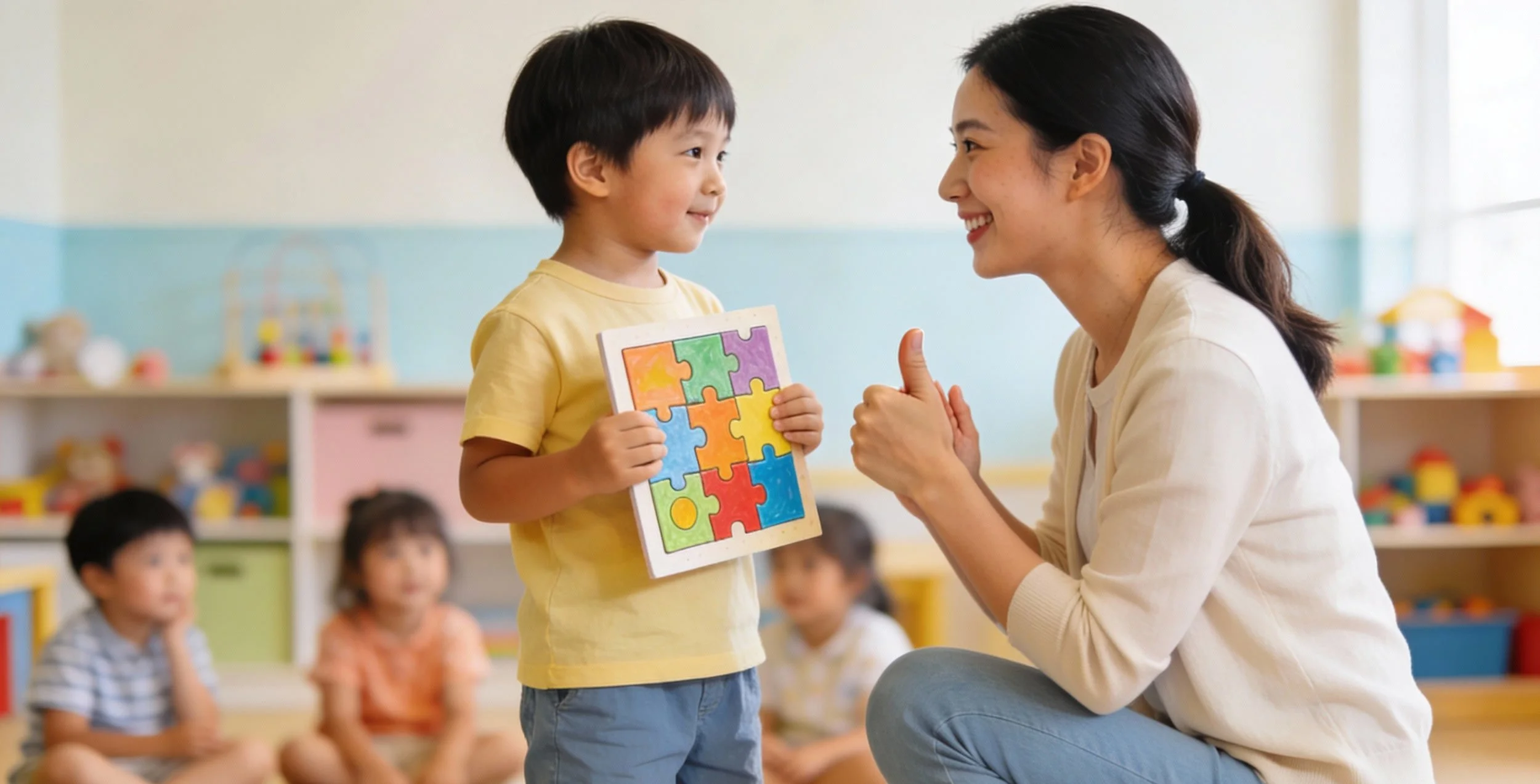
Each of these tasks might seem simple, but they send a powerful message: "You are capable. I trust you." When children accomplish something on their own, their faces light up with pride—and that pride builds self-esteem and independence.
Praising Effort and Positive Choices
How adults respond to children's efforts matters just as much as the tasks themselves. Teachers at our Pinellas Park preschool focus their praise on effort, persistence, and kind behavior rather than perfection.
For example:
Instead of "You're so smart," a teacher might say, "You worked really hard on that puzzle!"
Instead of "Good job," a teacher might say, "I noticed you waited patiently for your turn. That was kind."
This type of specific, effort-based praise helps children develop a growth mindset—the belief that they can learn and improve through practice. It also teaches them that making mistakes is part of learning, not something to be ashamed of.
Creating Calm, Predictable Preschool Classrooms
Routines and Visual Schedules That Support SEL
Young children feel safest when they know what to expect. At Brilliant Little Minds, teachers create consistent daily routines with clear beginnings, transitions, and endings. Visual schedules with pictures help children see what comes next—circle time, centers, snack, outdoor play, story time, and pick-up.
When routines are predictable, children spend less energy worrying about what will happen next and more energy learning, playing, and connecting with friends. Teachers also give gentle warnings before transitions, like singing a clean-up song or saying, "In a few minutes, we'll wash hands for snack." These small cues help children shift from one activity to another without frustration or anxiety.
Gentle, Positive Guidance for Preschool Behavior
Challenging behavior in preschool is common—children are still learning how to manage big feelings, wait their turn, and use words instead of actions. Teachers at our Pinellas Park center use gentle, positive guidance instead of harsh discipline.
This means:
Setting clear, simple expectations ("We use gentle hands")
Redirecting children when they make a mistake ("I can't let you throw blocks. Blocks are for building. Let's try again.")
Teaching replacement skills ("Instead of grabbing, you can say, 'Can I have a turn?'")
Staying calm and patient, even when behavior is frustrating
Teachers also work to understand the "why" behind behavior—is the child tired, hungry, overwhelmed, or needing attention? By treating behavior as communication, teachers respond with empathy and support rather than punishment, which helps children feel understood and learn better ways to cope.
You can read more about how we keep children healthy, which includes emotional comfort and support during times when children are not feeling their best.
Partnering With Families on Preschool Social-Emotional Growth
Daily Communication and Shared Strategies
Social-emotional learning works best when families and teachers are on the same team. At Brilliant Little Minds, teachers share brief updates at pick-up, send notes or photos through communication apps, and schedule longer conferences to talk about progress, challenges, and celebrations.
Teachers might share simple strategies that families can try at home, like:
Using the same feeling words at home and school
Practicing deep breaths or counting to calm down
Creating a cozy corner at home for quiet time
Reading books about feelings and friendships together
Role-playing social situations like sharing or asking to join a game
When children hear the same messages and practice the same skills at home and at school, they learn faster and feel more secure.
Collaborating When Extra Support Is Needed
Sometimes a child may need more help with emotions, friendships, or behavior than classroom strategies alone can provide. Teachers at Brilliant Little Minds will communicate openly with families if they notice ongoing struggles, and together, you can explore next steps.
This might include talking with your pediatrician, connecting with early intervention services, or working with a child development specialist. Our goal is always to support the whole child and to make sure every family has the resources and information they need to help their child succeed.
We also invite you to explore our posts on how we use STEAM activities and family-friendly places near Brilliant Little Minds to see how learning and social-emotional growth extend beyond the classroom such as exploring local parks, libraries, and activities.
How Brilliant Little Minds Brings Preschool SEL to Life
"Every Child Is Family" in Pinellas Park
At Brilliant Little Minds, our tagline is more than words—it is how we show up every day. Social-emotional learning happens when children feel known, loved, and safe, and our teachers build warm, caring relationships with every child from day one.
You will see teachers greet children by name at the door, get down on the child's level to make eye contact and listen, and celebrate small moments of kindness, bravery, and effort throughout the day. These everyday interactions matter because they tell children, "You belong here. You are important. We believe in you."
Our staff members receive ongoing training in early childhood development and positive guidance so they can respond to each child's unique needs with patience and skill. Leadership supports teachers in planning activities, reflecting on classroom dynamics, and continuously improving how we nurture the whole child—socially, emotionally, physically, and cognitively.
See Our Social-Emotional Learning in Action
The best way to understand how Brilliant Little Minds supports emotions, relationships, friendships, and confidence is to visit and see for yourself. During a tour, you can observe how teachers talk with children about feelings, how classrooms are set up with cozy spaces and group areas, and how daily routines flow smoothly and kindly.
You can ask questions about our approach, meet our team, and imagine your child thriving in a place where they are celebrated for who they are and supported in becoming who they will be.
If you are looking for a preschool in Pinellas Park that treats social-emotional skills as seriously as academics, we would love to meet your family.
Schedule a tour or contact Brilliant Little Minds today to learn more about our programs and see how we make every child feel at home.
