

STEAM for Little Learners: Simple Science, Math, and Art Activities We Use in the Classroom
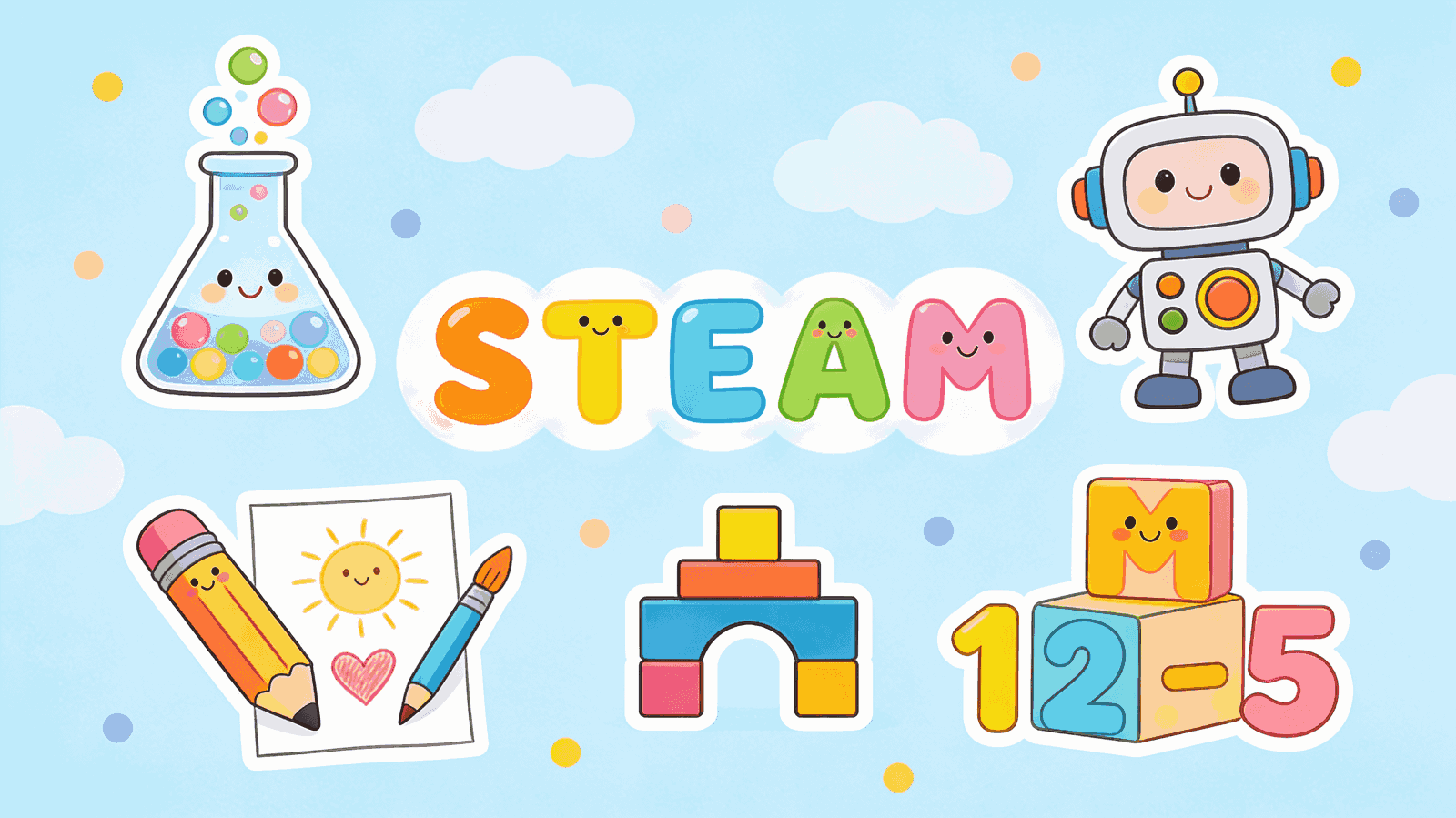
Have you ever watched a young child become completely absorbed in play? Maybe they're pouring water from cup to cup, stacking blocks higher and higher, or mixing colors with paint. In those moments, something magical is happening—they're discovering how the world works. At Brilliant Little Minds Early Childhood Learning Center in Pinellas Park, we call this STEAM, and it's at the heart of everything we do. It's not about worksheets or formal lessons. It's about nurturing curiosity, fueling imaginations, and celebrating each unique spark that lights up our community with joy.
What Is STEAM for Young Children?
Let's start with the basics. STEAM stands for Science, Technology, Engineering, Art, and Math. But here's the thing: STEAM in early childhood doesn't look like a science class or a math test. It looks like play—messy, joyful, exploratory play where children ask questions, make discoveries, and build confidence in their own abilities.
When a preschooler builds with blocks, they're doing engineering and math. When they mix colors at the paint easel, they're experimenting with science. When they ask "what happens if…?" they're thinking like a scientist. The beauty of STEAM in early childhood is that children don't have to know they're learning. They're simply playing, exploring, and discovering at their own pace.
At Brilliant Little Minds in Pinellas Park, STEAM is woven into playtime throughout the day. Our preschool program is designed to spark this kind of hands-on, joyful learning. We're not trying to turn preschoolers into engineers or mathematicians—we're giving them the experiences and support they need to become curious, creative, confident thinkers.
Simple Science Experiences in Everyday Play
Science for little learners is about observation, exploration, and wonder. It happens in the simplest, most everyday moments—and those moments are precious.
Exploring Nature and the Senses
One of the most powerful science experiences happens when children explore nature with all their senses. In our classrooms and outdoor spaces, children look closely at leaves, rocks, and insects. They notice colors, textures, and patterns. They watch clouds move across the sky. They feel the difference between wet sand and dry sand, notice how rain sounds different on different surfaces, and talk about what they smell after it rains.
These sensory experiences are the foundation of scientific thinking. Children are naturally curious about the world around them, and when we give them time and space to explore, we're feeding that curiosity. Nature walks, outdoor play, and sensory tables filled with water, sand, and safe natural materials let children discover science firsthand.
Cause and Effect Through Hands-On Activities
Young children are fascinated by cause and effect. Push something—and it rolls. Drop something—and it falls. Pour water—and it flows. These aren't random discoveries; they're the building blocks of scientific understanding.
In our classrooms, children roll toy cars down ramps and watch what happens. They pour and scoop water, experimenting with how liquids move and change shape. They push dominoes in a chain reaction, squeeze play dough to see it change form, and observe what happens when they paint with different tools. Teachers ask open-ended questions: "What do you think will happen if we make the ramp steeper?" "How is the wet sand different from the dry sand?" These questions help children think like scientists.
Everyday Math Moments in the Classroom
Math isn't just something that happens at math time. At Brilliant Little Minds in Pinellas Park, math is woven into the entire day—and children don't even realize they're learning it.
Counting, Sorting, and Patterns
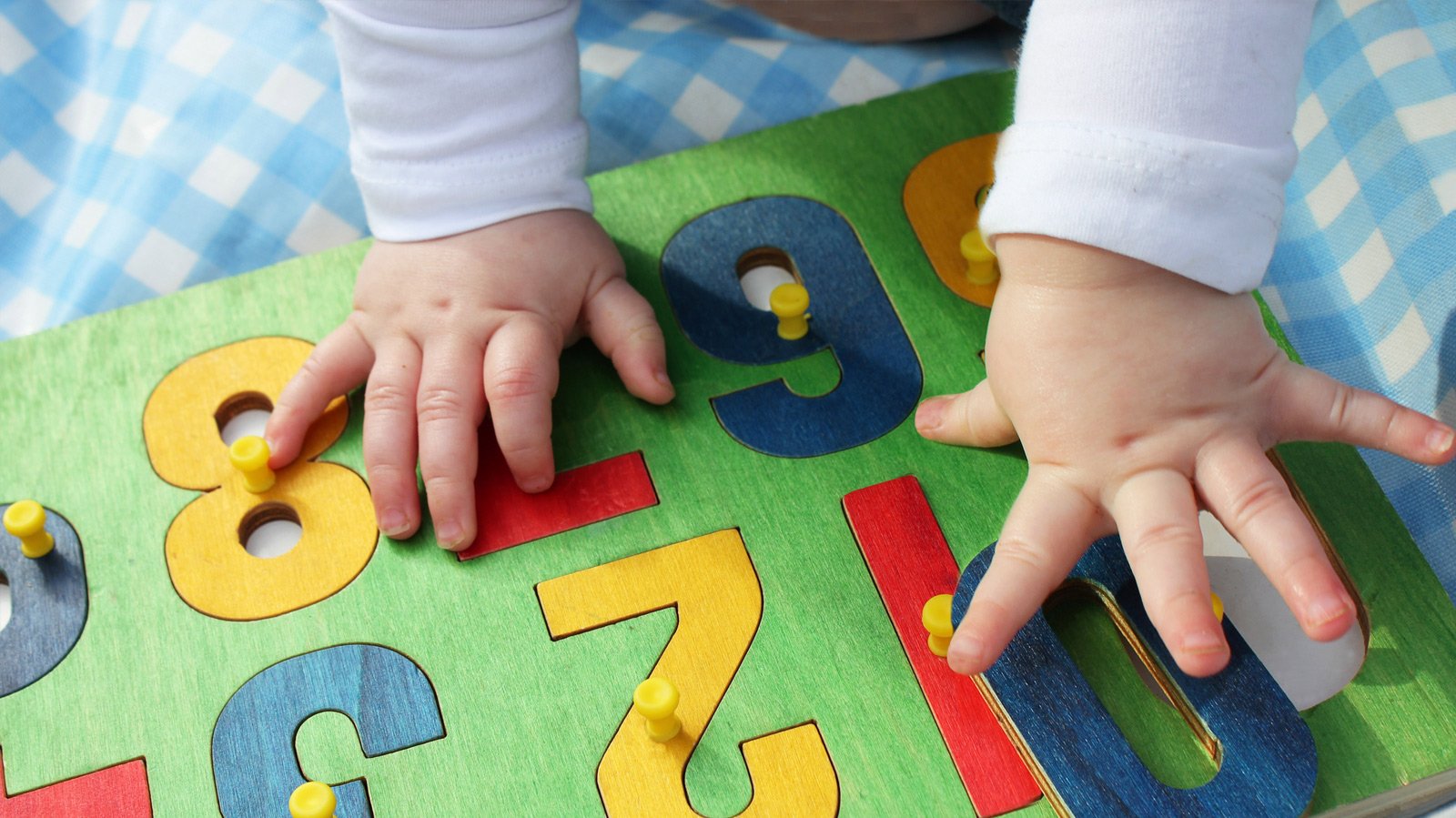
Counting comes naturally to young children. We count steps as we walk to the playground. We count blocks as we build a tower. We count snack crackers before we eat them. Sorting and organizing also come naturally—children naturally want to group things by color, size, or type.
Teachers intentionally create opportunities for this learning. A basket of mixed toys becomes a sorting activity. A line of children becomes a counting opportunity. A necklace of beads becomes a chance to create and recognize patterns. When children sort by color or size, arrange blocks from smallest to biggest, or make a pattern with shapes, they're building essential math skills through play.
Measuring, Comparing, and Using Math Words
In sensory bins filled with water, sand, and scoops, children measure and compare without even thinking about it. "More water in my cup!" "Your tower is taller than mine." "I need a bigger scoop." These everyday conversations are full of rich math language and thinking.
When children build with blocks, they compare heights and sizes. When they play in the kitchen area, they use cups and scoops, learning about volume and capacity. Teachers celebrate this thinking by using math words: "Yes, your block tower is much taller!" "You used the big scoop, so you have more sand." Simple comparisons and math vocabulary turn everyday play into mathematical thinking.
Art as a Fun Path Into STEAM
Art isn't separate from STEAM—it's woven right through it. When children create, they're problem-solving, experimenting, and expressing themselves. Art at our center is open-ended, joyful, and full of possibility.
Open-Ended Art Projects
At Brilliant Little Minds, art is about process, not product. Children paint, draw, create collages, and work with clay. They experiment with mixing colors and discover what happens when colors blend. They try different tools—brushes, sponges, finger painting, printing with objects—and see how each creates a different effect.
Open-ended art means there's no "right way" to do it. A child's painting doesn't have to look like a flower to be beautiful and meaningful. What matters is that they're exploring, creating, and expressing their unique spark. Teachers celebrate each child's work and encourage them to talk about their choices and discoveries.
Creating and Building With Everyday Materials
Some of the best building materials are things families throw away. Cardboard boxes become houses or rockets. Empty containers become musical instruments or building blocks. Recyclable materials become art projects. When children build structures, create "inventions," or design a pretend shop during dramatic play, they're solving problems and thinking creatively.
Teachers encourage children to ask: "What could we build with this?" "How can we make it stronger?" "What can we use to connect these pieces?" This kind of thinking develops engineering and problem-solving skills naturally through play. To learn more about how we support each child's growth and learning style, explore our developmental profiles by age.
Problem-Solving, Questioning, and Working Together
Some of the best learning moments happen when children face a challenge and work together to solve it. STEAM activities help children practice problem-solving and collaboration, skills that tie directly to building confidence and friendships through social-emotional learning.
Simple Challenges for Little Learners
In our classroom, children might try to build a tower that doesn't fall over, create a bridge strong enough for toy cars to roll across, or design a pretend restaurant with a menu and tables. These simple challenges encourage thinking, problem-solving, and persistence. When a tower falls, children try again with a different approach. When the bridge isn't strong enough, they experiment with different structures.
Working through these challenges teaches children that problems are opportunities for learning. It builds confidence and resilience. And it's fun—there's nothing quite like the pride a child feels when their bridge finally holds!
Encouraging Curiosity and "Why" Questions
The best teachers ask questions instead of giving answers. "What do you think will happen?" "How could we make it stronger?" "Why do you think it fell?" "What else could we try?" These questions invite children to think, experiment, and discover.
When children ask questions—and at this age, they ask a lot—we take them seriously. A child asks, "Why does water drip?" and suddenly we're exploring gravity, liquids, and cause and effect. A child wonders, "How do ants carry such big things?" and we're learning about insects, strength, and observation. Curiosity is the fuel that powers learning, and teachers at Brilliant Little Minds are skilled at fanning that flame. Discover how we nurture social-emotional development alongside cognitive growth in our supportive classrooms.
How Brilliant Little Minds Brings STEAM to Life Every Day
Age-Appropriate, Play-Based Activities
STEAM at Brilliant Little Minds isn't about fancy equipment or complex experiments. It's about activities that are safe, developmentally appropriate, and tailored to toddlers and preschoolers. Children learn best through play, movement, and hands-on exploration. Our activities are designed with this in mind.
In our infant and toddler programs, STEAM might look like exploring textures with safe materials, pouring and scooping, stacking and knocking down. In our preschool and pre-K programs, it expands to more complex building, more detailed observation, and bigger challenges. And in our VPK program in Pinellas Park, children build on all these skills and begin thinking about problems in new ways.
There are no worksheets. There's no pressure to get the "right answer." There's just joyful, active, playful learning at each child's own pace.
A Warm, Creative Learning Environment in Pinellas Park
At Brilliant Little Minds, our classrooms are designed for STEAM learning. We have spaces for sensory exploration, building and construction, art and creativity, dramatic play, and quiet reflection. Small-group activities mean children get lots of individual attention and support. Teachers celebrate each child's ideas and efforts, no matter how unconventional.
Our staff understand that children learn differently and at different paces. One child might love building; another might lose themselves in art. One might be fascinated by nature; another might love dramatic play. We make space and offer support for all of these different ways of learning.
Simple STEAM Ideas You Can Try at Home
Want to extend STEAM learning beyond our classrooms? It's easier than you might think! Count during snack time. Go on nature walks and notice what you see, hear, and feel. Draw pictures of what you observe. Build with household items. Explore cooking and mixing (with supervision). Ask your child lots of "what if" questions. The best part? You don't need special materials or fancy setups. STEAM happens everywhere when children are curious and supported.
Families can continue the STEAM exploration at home and by visiting children's museums and learning spots near Pinellas Park and St. Pete on weekends.
Ready to See STEAM in Action?
If you're looking for a preschool or daycare in Pinellas Park that makes learning exciting and creative for little learners, we'd love to show you how we bring STEAM to life. Visit our classrooms to see hands-on learning in action.Schedule a tour of Brilliant Little Minds today and watch children exploring, building, creating, and discovering. Contact us to learn more about our STEAM-rich curriculum and how we nurture curious, creative thinkers. Ready to enroll?
Complete our enrollment form to reserve your child's spot in our Pinellas Park preschool, toddler program, or VPK class.
At Brilliant Little Minds, where every child is family, we believe the spark of curiosity is one of the greatest gifts we can nurture. We can't wait to celebrate your child's discoveries.
